.svg)

Reverse mortgage for purchase: the honest pros and cons for Clayton County downsizers
If you are 62 or older and thinking about a smaller home in Riverdale, you have probably heard the phrase "reverse mortgage" and felt your guard go up. Good. It is a real tool that helps some downsizers, and it is the wrong move for plenty of others. This is the plain version: how a HECM for Purchase actually works, who it fits, and where the fine print bites.
What a HECM for Purchase actually is
HECM stands for Home Equity Conversion Mortgage. The "for purchase" part, often called H4P, lets a buyer 62 or older use an FHA-insured reverse mortgage to buy their next primary home. Here is the mechanic that trips people up: you still bring a large down payment. The reverse mortgage covers the rest of the price, and you make no required monthly mortgage payment for as long as you live in the home as your primary residence.
Say you sell your current place and walk away with a good chunk of equity. You put a big piece of that down on the next home, roughly 45% to 62% of the price depending on your age, and the H4P covers the balance. Older buyers put down less, because the loan is sized on how long they are statistically likely to stay. The result is a smaller, single-level home with no monthly payment to the lender.
The honest pros
The appeal is real when it lines up with your goals.
- No required monthly mortgage payment. For a retiree living on fixed income, that frees up cash flow every month.
- You keep a cash cushion. Instead of sinking every dollar of your sale into the new house, you put down part and hold the rest for medical costs, travel, or just breathing room.
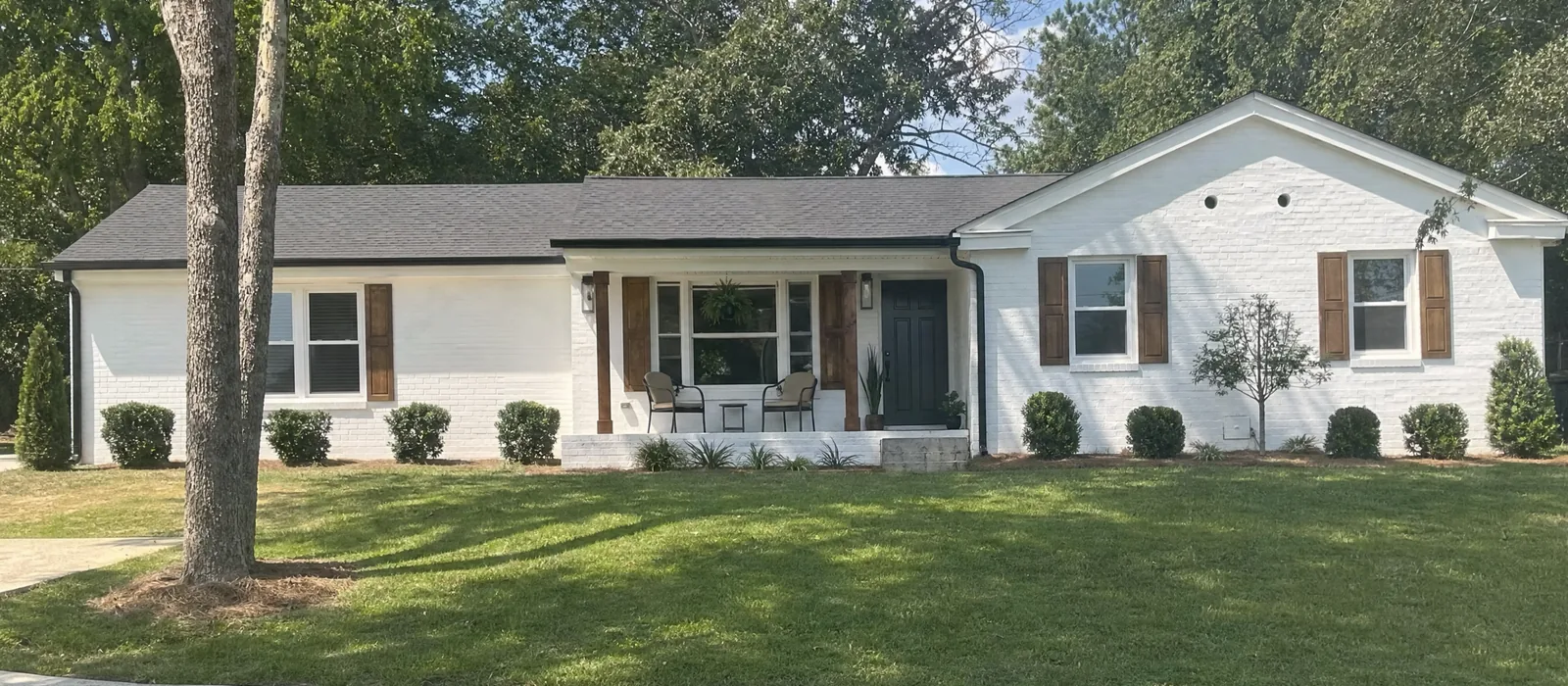
- You buy the home you actually want now. A newer single-level ranch in 30296 without a monthly payment can beat renting or stretching for a conventional loan you would struggle to carry.
The honest cons, and this is the part people skip
A HECM is a loan against your equity, not free money. Say the downsides out loud before you fall in love with the idea.
- The balance grows over time. You are not paying it down. Interest and fees add to what you owe every year, so the loan gets bigger while your equity shrinks.
- Closing costs run higher than a normal mortgage. There is an FHA mortgage insurance premium plus lender and origination costs. This is a more expensive loan to set up.
- It cuts what your heirs inherit. When the loan comes due, usually when you sell, move out for good, or pass away, the balance gets paid from the home's value. Your children inherit what is left, which is less than a paid-off house. If leaving them a free-and-clear home is the priority, this is the wrong tool. Full stop.
- You still owe the other bills. No mortgage payment does not mean no obligations. You keep paying property taxes, homeowners insurance, and upkeep. Fall behind on those and the loan can be called due.
- HUD counseling is required before you can close. Federal rules make you sit through independent counseling from a HUD-approved counselor. That is a protection, not a hoop, and it is worth taking seriously.
Who it fits, and who it does not
I will give you the read I give buyers at my kitchen table.
It fits when you want a cash cushion and no monthly payment, you plan to stay in the home a good while, and leaving a mortgage-free house to your kids is not your top goal. A 68-year-old selling a paid-off two-story in Ellenwood, moving to a single-level ranch, and wanting to keep $60,000 liquid is a candidate worth a real conversation.
It does not fit when a paid-off home for your children is the point, when you might move again in a few years (the setup costs never pay off), or when a simpler path gets you there cleaner. Often it does. You can sell and buy the next home with cash, sell and rent for a season while you decide, or take a small conventional loan you can comfortably carry. There is no universal right answer, and anyone who tells you a reverse mortgage is always the answer is selling, not advising.
How this connects to your bigger downsizing plan
A HECM for Purchase is one financing option inside a larger move, and the move itself has its own moving parts. If you are weighing single-level homes, the senior homestead exemption, and how to sequence two closings without carrying two mortgages, start with the full picture on downsizing in Riverdale. When you want to go deep on the H4P mechanics, the age-based down payment ranges, and the loan-comes-due triggers, the HECM for Purchase program page lays it out.
The figures in this article are illustrative, meant to show how the program works, not to quote your loan. Your real numbers depend on your age, the home price, and current rates, and a participating lender has to run them.
Your next step
If you are 62 or older and a smaller Clayton County home is on your mind, do two things. First, get clear on what matters most to you: monthly cash flow, a cushion, or what you leave behind. Those goals point to different tools. Second, before you rely on any number, sit down with a HUD-approved counselor and a participating lender who can size an actual H4P for your situation. I can point you to both and stay in your corner on the real estate side.
I am Johnnie Benton Sr., a licensed Georgia REALTOR® with Epique Realty. I am not a mortgage lender or a tax advisor, and this article is educational, not lending or tax advice. Program rules and figures change over time, so verify your numbers with a participating lender before you rely on them. Start with one conversation.
“A HECM for Purchase is a real tool for some buyers 62 and up, and the wrong move for others. A HUD-approved counselor helps you decide.”
How I read these numbers before you act on them
Every figure on this page comes from county records, the MLS, or the program's own rules, with the date I pulled it. I would rather hand you the real number than a rounded-up one that feels better.
When you are ready, the next step is one conversation. We look at your situation, not a template, and figure out whether I am the right fit before you commit to anything.



Our latest articles

.svg)