.svg)
The FHA 203(k) renovation loan for a Clayton County fixer
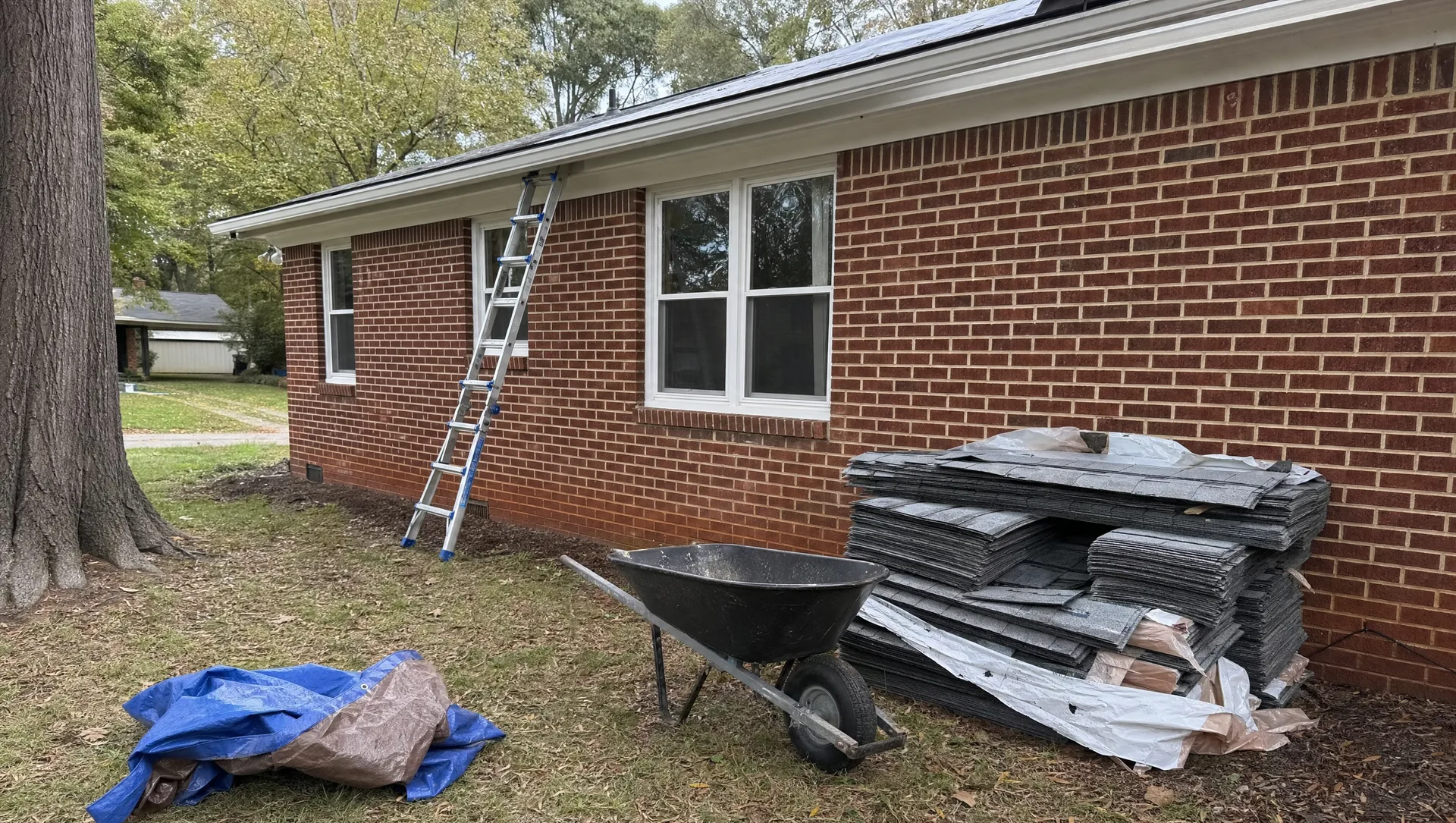
The FHA 203(k) folds the purchase price and the repair budget into one mortgage, so you buy the house and fix it after closing on a single loan. That is the whole idea. It lets you take on the dated brick ranch that scared off three other buyers, then pay for the new kitchen, the new HVAC, and the roof with the same financing that bought the house. In Clayton County, where a lot of the housing stock is 1970s to 1990s brick ranches that need updating, the 203(k) is one of the few tools that makes a rough house workable.
Most buyers here get pointed at a regular FHA loan and told to only look at move-in-ready homes. That is fine advice most of the time. But it walks you right past the houses that sit unsold for months because they need $40,000 of work and no ordinary loan will touch them. Those are the houses where a 203(k) earns its keep.
What the 203(k) actually does
A normal mortgage funds the house as it sits today. If the house needs a new roof and a gutted bathroom, the lender sees that condition, and either the appraisal comes in low or the loan gets denied outright. You are stuck. Either bring cash for repairs the seller will not make, or walk.
The 203(k) works off the after-improved value. The lender looks at what the house will be worth once the repairs are done, then lends against that number. Your down payment, still 3.5% on FHA, is calculated on the total of purchase price plus repair budget. At closing, the purchase money goes to the seller. The repair money goes into an escrow account and pays out to your contractor in draws as the work gets finished.
So you close on a house that is not livable yet, and the loan already holds the money to make it livable. One application, one closing, one monthly payment. You are not juggling a construction loan on top of a mortgage.
Limited vs Standard, and which one you need
There are two versions, and the difference matters before you fall in love with a house.
The Limited 203(k) caps repairs at roughly $75,000 and does not allow structural work. Think cosmetic and system upgrades. New kitchen, new bathrooms, flooring, paint, a new roof, HVAC replacement, a water heater, updated windows. For most Clayton County ranches that just need to be dragged out of 1985, the Limited version covers it. The paperwork is lighter and the close is faster.
The Standard 203(k) has a higher cap, up to the FHA loan limit for the area, and it allows structural work and partial rebuilds. Moving load-bearing walls, foundation repair, room additions, major reconfiguration. If the house has real structural problems or you want to change the footprint, this is the version you need. It also requires a HUD-approved 203(k) consultant to scope and oversee the work, which the Limited version does not.
Rule of thumb: if the house needs updating, look at Limited. If the house needs rebuilding, look at Standard.
What the repairs can cover
The 203(k) is meant for improvements that make the home safe, livable, and worth the money. That covers a wide range on a typical Riverdale ranch:
- Roof, gutters, and downspouts
- HVAC replacement or repair, plus ductwork
- Kitchen and bathroom remodels
- Flooring, drywall, interior and exterior paint
- Plumbing and electrical updates
- Windows, doors, and weatherproofing
- Accessibility modifications
- Well and septic repair on the unincorporated pockets that still have them
What it will not do is fund luxury add-ons that are not part of the house as a residence. A pool, an outdoor kitchen, a detached game room. The program is about making the home sound, not building a resort.
The honest tradeoffs
I tell every buyer the downsides before the upsides, so here they are.
There is more paperwork up front. You need contractor bids in hand before the loan is approved, so you cannot casually shop a 203(k) the way you shop a normal FHA loan. On the Standard version you also carry the required consultant, another person in the process, another cost.
The close is slower. A normal FHA purchase in Clayton County closes in about 30 to 45 days. A 203(k) runs 60 to 90 days because the lender has to review the repair scope, the bids, and the contractor before funding. If you are racing a lease that ends next month, this is a real problem.
Your contractor has to play along. The money releases in draws as work gets inspected and signed off, not up front. Some contractors do not want to wait on a draw schedule, so you have to find one who has done 203(k) work before. And the house has to be at least a year old and your primary residence, which rules out flips and rentals.
None of that is a dealbreaker. It is just work you do not do on an ordinary purchase, and you should know it is coming.
When it is worth it on a Riverdale ranch
The 203(k) earns its complexity when a specific house needs $30,000 to $50,000 of work but sits well below comparable homes in good shape. That gap is the whole reason to do it. The goal is to buy at the distressed price, fund the repairs into the loan, and come out near what a move-in-ready version of the same house would have cost. The appraisal and the bids decide whether the numbers get there.
The Clayton County median has recently sat in the $250,000 to $290,000 range, and I will pull the current figure, with the date, when we talk. When a tired ranch is listed at $190,000 because the kitchen is original and the roof is shot, and the fixed-up comps down the street are moving at $270,000, a 203(k) is one way to close that gap, if the after-improved appraisal and the repair bids support the numbers.
It is not worth the hassle just to get into a starter home that only needs paint and a light fixture. Save the 203(k) for the house that actually needs the money, where the after-improved value clears the purchase price plus the repair budget with room to spare. Full mechanics, the requirements list, and the Limited-vs-Standard breakdown live on the FHA 203(k) program page.
How it stacks with the local assistance programs
This trips people up, so it is worth being plain. The Clayton County down payment assistance program does not fund renovation. So on a 203(k), the repair budget rides on the loan alone. You are not getting the county to chip in on your new kitchen.
Georgia Dream can layer on top for down payment and closing costs, the same way it does on a regular FHA loan, which softens the cash you bring to the table. But the renovation dollars themselves come from the 203(k) and nowhere else. Plan your repair budget knowing the loan carries it by itself.
Your next step
If you have a specific house in mind, a ranch that everyone else is walking past because it needs work, that is exactly the conversation I want to have. We run the math on the purchase price, the realistic repair budget, and the after-improved value, and we figure out fast whether a 203(k) turns that house into the best deal on the block or into a headache you do not need. Bring me the address and the list of what is wrong with it. Schedule a call and we will work it through together.
I am Johnnie Benton Sr., a licensed Georgia REALTOR® with Epique Realty. I am not a mortgage lender or a tax advisor, and this article is educational, not lending or tax advice. Program rules and figures change over time, so verify your numbers with a participating lender before you rely on them. Start with one conversation.
“One loan buys the house and funds the repairs. Here is how the FHA 203(k) works and where the tradeoffs bite.”
How I read these numbers before you act on them
Every figure on this page comes from county records, the MLS, or the program's own rules, with the date I pulled it. I would rather hand you the real number than a rounded-up one that feels better.
When you are ready, the next step is one conversation. We look at your situation, not a template, and figure out whether I am the right fit before you commit to anything.

Our latest articles

.svg)