.svg)

First-time home buyer in Georgia: how the money stacks in Clayton County
Most Georgia first-time buyer advice online talks about one program at a time. Georgia Dream here, an FHA loan there, a tax credit somewhere else. That is fine for a blog post, but it is not how a real purchase works in Clayton County. In practice you build a home purchase in layers, and the layers sit on top of each other in a specific order. This article walks through that stack the way I explain it at my kitchen table in Riverdale, layer by layer, so you can see how a buyer here gets to closing with a few hundred dollars instead of fifteen thousand.
If you want the full step-by-step version, from credit repair to closing day, read my first-time homebuyer guide for Riverdale. This one is about the money and how the pieces fit together.
Start with the first mortgage, because everything sits on it
Your first mortgage is the real loan. It is the big number on your closing statement and the payment you make every month for the next 30 years. Everything else in this article stacks on top of it. So you pick this one first.
For a first-time buyer in Clayton County, the first mortgage is almost always one of two loans. An FHA loan asks for 3.5 percent down and is forgiving on credit, which is why most of my buyers use it. A Conventional loan can go as low as 3 percent down and drops mortgage insurance sooner once you have equity, but it wants a stronger credit profile. If you are a veteran, a VA loan puts zero percent down on the table, and that changes the math in your favor before any assistance even enters the picture.
Here is the number that matters for the rest of the stack. On a $270,000 home in Riverdale, an FHA loan wants about $9,450 down, and you can figure another $7,000 to $9,000 in closing costs. Call it $16,000 or so in cash to get to the table. That is the gap the assistance programs are built to close.
Layer two: Georgia Dream, and be honest about what it is
Georgia Dream is the state's down payment assistance program, run by the Georgia Department of Community Affairs. It sits on top of your first mortgage as a second loan and covers the money you would otherwise bring to closing.
I have to be plain about one thing, because half the buyers who call me have it wrong. Georgia Dream is a second mortgage, not a grant. It is set at zero percent interest with no monthly payment, so it feels free while you live in the house. It is not. The full balance comes due the day you sell the home, refinance the first mortgage, or move out and stop using it as your primary residence. There is no forgiveness clause. You owe every dollar back eventually. Learn how the tiers and the repayment triggers actually work on the Georgia Dream page.
The amount depends on your situation. The Standard tier gives up to $10,000 or 5 percent of the price. If you are a public-service worker, and that list is wide, covering active-duty military, law enforcement, firefighters, EMTs, teachers, and nurses, the PEN tier bumps you to $12,500. There is also a CHOICE tier at $12,500 for households with a documented disability. You get one tier per purchase.
Layer three: the Clayton County DPA, which actually gets forgiven
Now the local layer, and this is the one that is genuinely closer to free money. The Clayton County down payment assistance program, run through the county's grants office, is a forgivable second. Live in the home for the full term and you owe nothing back. That is the real difference from Georgia Dream, and it is worth understanding before you plan your stack.
The Standard tier is up to $7,500, forgiven over 5 years. The Enhanced tier reaches $10,000, forgiven over 10 years, and it is aimed at veterans, first responders, teachers, nurses, and county employees. It stacks right on top of Georgia Dream on the same FHA or Conventional first mortgage. The full breakdown, including the income limits and the Preferred Lender requirement, lives on the Clayton County DPA page.
There is one hard rule you have to respect. The Clayton DPA carries a $270,000 purchase price cap that the county cannot raise, because it is a HUD limit. In most of Riverdale that is no problem at all, since recent median sale prices here sit comfortably under the cap (the sourced figures are in my first-time homebuyer guide). It matters more in Ellenwood, where newer inventory often prices above the cap. Cross that $270,000 line and this whole layer falls off the stack. So in Clayton County the price cap is a planning decision, not a footnote.
Layer four: the MCC tax credit, the one that keeps paying
The stack does not stop at down payment help. On top of everything else, some buyers can add a Mortgage Credit Certificate, usually called an MCC, when an issuing agency is offering one. A participating lender can confirm whether it is available for your purchase. This one is different in kind. It is a federal tax credit, so it does not help you at closing at all. It shows up every April.
Here is how it works in plain terms. An MCC lets you claim a portion of the mortgage interest you pay each year as a direct credit against your federal tax bill, on top of the regular mortgage interest deduction. A direct credit is a dollar-for-dollar reduction of what you owe the IRS, which is why it is worth more than a deduction. For a first-time buyer holding a mortgage for years, that can add up to real money back each year, within the IRS annual cap, for as long as you live in the home and carry the loan. A tax professional can tell you what it would actually mean on your return. You have to apply for it before you close, through a participating lender, so it is not something you can bolt on later. Ask about it early.
The order matters, so here is the sequence
People get overwhelmed because they try to think about all four layers at once. You do not have to. They go in order.
First, get pre-approved for the first mortgage and find out which loan you qualify for, FHA or Conventional or VA. Second, confirm you clear the program gates, which for most of these means a 640 credit score, a household income under the caps, and the 8-hour HUD homebuyer course done before closing. Third, layer Georgia Dream and the Clayton County DPA onto that first mortgage to cover your down payment and closing costs. Fourth, apply for the MCC before you close so the tax credit is locked in from year one.
The most powerful Clayton stack I see is a public-service buyer combining Georgia Dream PEN at $12,500 with the Clayton Enhanced DPA at $10,000. That is $22,500 in assistance on one purchase, which on a home under the $270,000 cap is enough to cover the down payment and nearly all the closing costs. The Clayton County half of that stack has its own income ceiling, and it is lower than the Georgia Dream one. You need to be at or below 80 percent of the area median income, which HUD sets by household size. Plenty of Riverdale buyers land under it. Some do not. That is a five minute conversation with a participating lender, and it is worth having before you fall in love with a house. Add an MCC on top, where one is available, and you have help at the table plus a possible credit each tax season.
The free homebuyer course is not optional, so start it early
Every one of these programs requires the same thing before you can close: an 8-hour HUD-approved homebuyer education course. Georgia Dream requires it. The Clayton County DPA requires it. One approved course generally satisfies both, so you take it once.
The mistake I watch buyers make is treating the course as the last box to check, and then it holds up their closing while they scramble for a class date. Do not do that. Sign up at the start of your search, not the end. It is free or low-cost, you can knock it out in a weekend or across a few evenings, and it teaches you the budgeting and contract basics that make the rest of this less intimidating. Get the certificate in hand early and it never becomes the thing standing between you and your keys.
What the numbers really look like in Clayton County
Let me put illustrative numbers on it so the stack is concrete. Take a $260,000 home in Riverdale, under the DPA cap, bought with an FHA first mortgage. The down payment runs about $9,100 and closing costs another $8,000 or so, which is roughly $17,000 in cash you would otherwise need.
Now stack the assistance. Georgia Dream PEN covers $12,500. The Clayton Enhanced DPA covers another $10,000. That is $22,500 sitting on top of your first mortgage, which is more than enough to cover both the down payment and the closing costs. Both halves have income limits, and the Clayton one is stricter at 80 percent of area median. A participating lender confirms which tier you land in. Your cash to close drops from around $17,000 to something in the neighborhood of a required minimum buyer contribution, often around $1,000. The MCC does not touch that closing number, but it can put part of your mortgage interest back in your pocket each year, if your purchase qualifies.
Those figures are illustrative, not a quote. Prices, rates, income limits, and program rules all move, and the right stack depends on your credit, your income, and which house you are buying. That is the conversation I have with buyers before they ever fill out a loan application.
Your next step
If you are a first-time buyer in Clayton County and this is the first time the whole stack has made sense, you are already ahead of most people who start this process. The next move is a short conversation about your specific numbers and your credit, and then a participating lender confirms which layers you qualify for. Start with the first-time buyers page to see the stack laid out, then reach out and we will map your situation to the right combination.
I am Johnnie Benton Sr., a licensed Georgia REALTOR® with Epique Realty (license 424101). I am not a mortgage lender, loan officer, or tax advisor, and nothing here is lending, tax, or financial advice. Rates, eligibility, and program rules are set by lenders and the agencies that run these programs, and they change over time. The figures here are illustrative and meant to show how the program works, not to quote your loan. Verify your specific numbers with a participating lender before you rely on them. Reading this page does not make me your agent. One conversation, and we figure out together whether I am the right fit.
“Up to $22,500 in stacked help, and here is exactly how the stack works and who qualifies.”
How I read these numbers before you act on them
Every figure on this page comes from county records, the MLS, or the program's own rules, with the date I pulled it. I would rather hand you the real number than a rounded-up one that feels better.
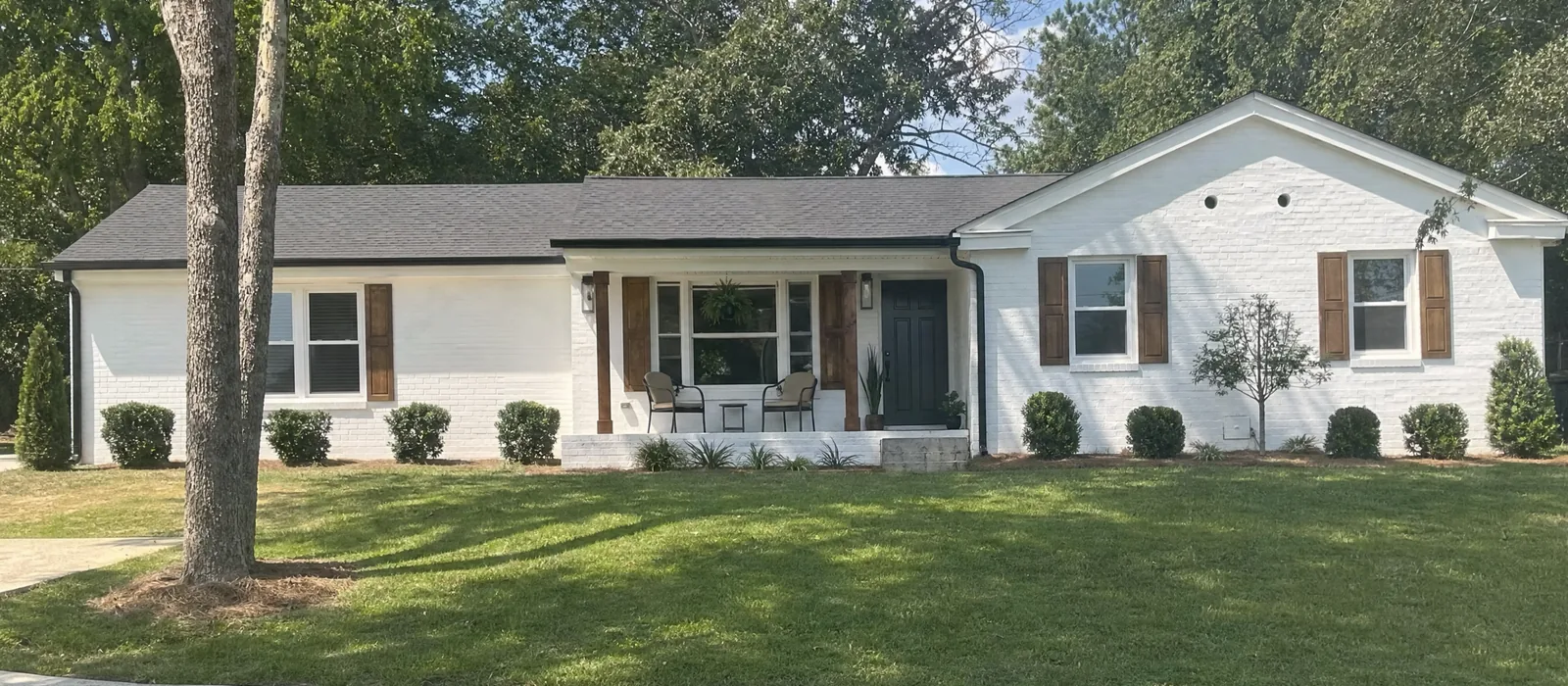
If you would rather work through this in a room with other people asking the same questions, that is what the Clayton County first-time buyer workshop is for.
When you are ready, the next step is one conversation. We look at your situation, not a template, and figure out whether I am the right fit before you commit to anything.



Our latest articles

.svg)